Why Do Some Healthy Foods Have Red Traffic-Light Ratings?
One of the biggest misunderstandings about food traffic-light labels is that many people assume a red rating means a food is unhealthy.
In reality, that’s not what the system is designed to tell you.
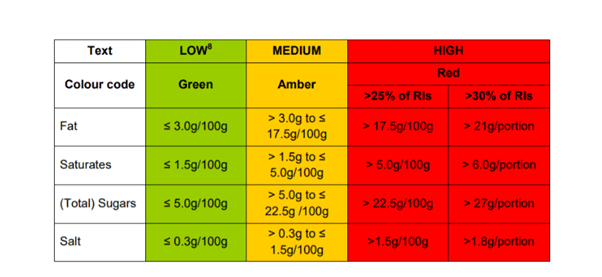
Traffic-light labels measure the amount of fat, saturated fat, sugar and salt in a food per 100g. They don’t take into account the wider nutritional benefits a food may provide.
For example, nuts often receive amber or red ratings for fat because they naturally contain a high amount of healthy fats. Some cheeses may receive red ratings for saturated fat, despite being a source of protein and calcium. Similarly, foods such as olive oil can receive red ratings because they are naturally high in fat, even though they are often included in balanced diets.
The purpose of the traffic-light system is not to label foods as “good” or “bad”. Instead, it helps consumers compare products and understand their nutritional content at a glance.
The most important thing is to look at the whole picture rather than focusing on a single colour. A balanced diet is built on a variety of foods, portion control and understanding your own dietary needs.
Traffic-light labels are a useful tool, but they’re only one piece of the nutritional puzzle.
Related Posts:
