Why Do Traffic-Light Ratings Use Values Per 100g?
If you’ve ever looked at a food label and wondered why nutritional information is shown per 100g, you’re not alone.
The answer is simple: it creates a level playing field.
Different products have different serving sizes. One person might eat a small bowl of soup while another enjoys a much larger portion. If nutritional information was only shown per serving, it would be difficult to compare products fairly, as everyone’s “serving” is going to be different.
By using values per 100g, manufacturers and consumers can compare foods on an equal basis.
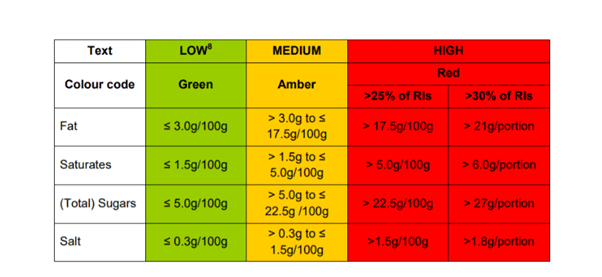
This standard measurement is also how traffic-light ratings are calculated. The amount of fat, saturated fat, sugar and salt per 100g determines whether a product receives a red, amber or green rating.
While the per-100g figure is useful for comparisons, it’s still worth paying attention to portion sizes. A food may appear high in a particular nutrient per 100g, but the amount you actually consume could be much lower.
Understanding both the per-100g values and your typical serving size can help you make more informed food choices.
At Crafty Cook, we also show per portion on our labels, this is useful if you’re sharing the product out equally between 2, 4 or 12 people depending on which size product you buy.
Related Posts?
- What Do Red, Amber and Green Food Labels Really Mean?
- How Does Crafty Cook Calculate Its RAG Ratings?
- Why Do Some Healthy Foods Have Red Traffic-Light Ratings?
- Can I Trust Food Traffic-Light Labels?
- How do we Calculate the Nutritional Values for For Crafty Cook?